
Can a Patio Cover Withstand Arizona Monsoon Winds?
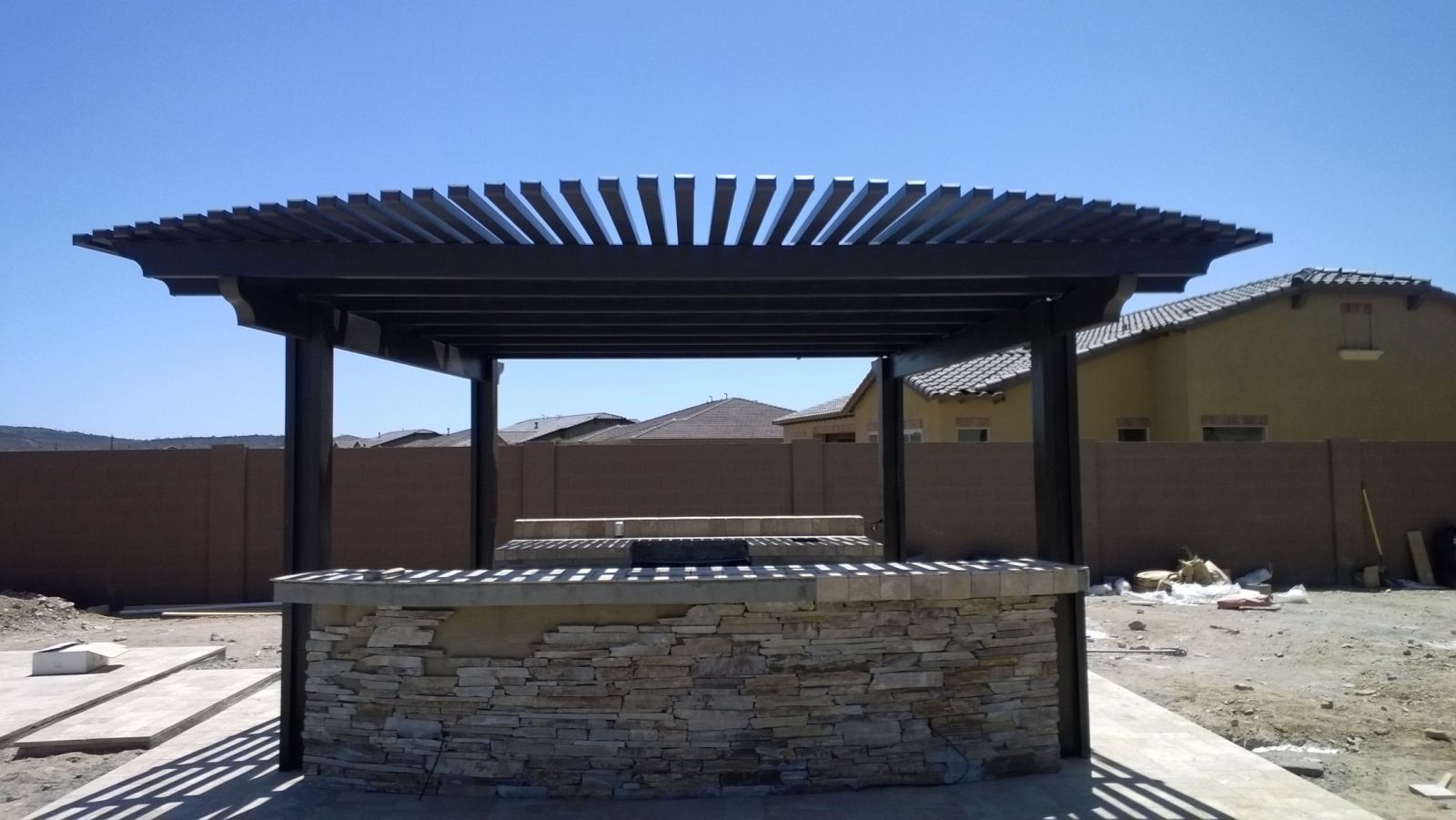
Yes — a properly engineered patio cover can withstand Arizona monsoon winds, including the 50 to 70 mph gusts that hit the Valley most summers. The trouble starts when a cover is not properly engineered, and that's what I want to talk about today.
I'm the owner of Southwest Patio. I've been building patio covers around Phoenix for more than 20 years (ROC #282768), and every August my phone rings with the same question: "Will my cover make it through monsoon season?" Here's my honest answer.
Why Monsoon Season Is the Real Test
Our monsoon runs from mid-June to the end of September. Most storms bring gusts in the 40 to 60 mph range. A haboob — one of those big walls of dust — looks like the end of the world, but the wind inside it usually isn't the worst part. The scary one is the microburst. That's a column of cold air that slams straight down out of a storm and spreads out when it hits the ground. In a small area, a microburst can push winds past 80 mph.
So when folks ask me about wind, I tell them we're not designing for a breezy afternoon. We're designing for that one ugly night in July when the sky turns brown and the neighbor's trampoline goes airborne.
What Helps a Patio Cover Handle Monsoon Winds in Arizona
A patio cover doesn't survive wind by luck. It survives because of boring stuff you never see. Here's what matters most:
• Real engineering. Our covers are built from engineered plans that meet local building codes for wind load. When a permit is required, the city reviews that engineering too.
• Strong footings and posts. Wind doesn't just push on a cover — it lifts it, like a wing. Proper concrete footings and correctly sized posts keep it planted.
• A solid connection to your house. An attached cover is only as strong as its attachment. We tie into the home's structure, not just the fascia trim.
• The right material. We build with Elitewood, an embossed aluminum that looks like wood. It doesn't dry out, crack, or loosen at the joints in our heat the way wood does. A wood cover that's baked through ten summers is weaker than the day it went up.
Wind resistance starts at the bottom of the post, not the top. Learn how we check your slab and when footings are required in our guide to whether you need footings for a patio cover.
A Storm Story From a Backyard in Surprise
A couple of summers ago, a microburst clipped a neighborhood in Surprise where we'd installed a solid insulated cover the year before. The homeowner called me the next morning, and I braced for bad news. Instead, he told me his cover was fine — it didn't lose a screw — but a kit-style cover two doors down had peeled up and landed in a neighbor's pool. Same storm. Same street. The difference was footings, hardware, and engineering.
I drove out anyway to look it over. We hosed the dust off, tightened nothing, and that was that. That's what "built for monsoon country" is supposed to look like.
Surviving one storm and lasting for decades come down to the same two details: how the ledger is attached to the house and how the footings were set. Those are also what determine whether a cover is still solid at year 20 or racking at year 7. If you are weighing a long-term investment rather than a single storm, read how long does an aluminum patio cover last in Arizona.
Let's Be Honest: What No Cover Can Survive
I won't blow smoke at you. There are things no patio cover — mine included — is built to shrug off:
• A direct microburst hit. Winds over 100 mph can damage roofs, block walls, and yes, patio covers.
• Flying debris. A trampoline, a sheet of plywood, or a snapped tree limb doesn't care how good your cover is.
• Cheap or neglected covers. Skinny posts sitting on a thin slab with no footings, rusted fasteners, or a kit somebody threw up over a weekend with no plans — those fail first, every time.
A good cover stacks the odds heavily in your favor. It doesn't make your backyard stormproof, and anyone who promises that is selling you something.
One question we get right after wind is whether a cover that stands on its own posts is more exposed than one tied to the house. The short answer is that engineering and footing depth decide it, not the category. If you are still weighing the two, we lay out where each one makes sense in attached vs freestanding patio cover.
Which Cover Style Holds Up Best in the Wind?
For most families, I recommend a solid insulated patio cover. It's a strong, interlocking roof system, and the same panels that block our heat also stand up well to wind and driving rain. If you like open air, an adjustable louvered cover is a smart monsoon choice too — you can open the louvers and let a gust pass through instead of fighting it. You can compare every style we build on our product styles page.
Get a Cover Built for Monsoon Country
If you want a patio cover that can withstand Arizona monsoon winds, the time to plan it is before the next storm rolls in — not after. I've been shading Valley backyards for over 20 years, we handle the HOA approvals and permits for you, and financing is available. Call me at 623-695-6445 for a free estimate, or visit Southwest Patio to see our work. We're The Shade Experts, and monsoon season is when it shows.
FAQ: Patio Covers and Monsoon Winds
What wind speed can an aluminum patio cover handle?
An engineered aluminum cover is designed to meet local building-code wind loads, which are set well above what a typical monsoon storm delivers. The exact number depends on your city, the size of the cover, and how it's attached — that's what the engineering on your specific project spells out.
Should I do anything to my patio cover before a big storm?
Mostly, take care of what's around it. Stow umbrellas, stack light furniture, and secure toys and trampolines. A lot of "cover damage" I see actually started as flying-furniture damage. Once a year, glance at your posts and fasteners, and call us if anything looks loose.
Will homeowner's insurance cover monsoon damage to a patio cover?
A permitted, professionally installed cover is usually treated as part of the home, like your roof — but every policy is different. It's one more reason to do it right with permits, since an unpermitted cover can give an adjuster a reason to say no. Check with your agent.
Contact Southwest Patio
Southwest Patio
2523 S 227th Ave
Buckeye, AZ 85326
Phone: 623-695-6445
Stay connected with Southwest Patio for patio cover ideas, shade solutions, project updates, and outdoor living tips for Arizona homeowners.
Follow Southwest Patio Online:
Facebook | X | Instagram | YouTube
Worked with Southwest Patio?
Leave us a review on Google Maps