
Attached vs Freestanding Patio Cover: Which Is Better in Arizona?
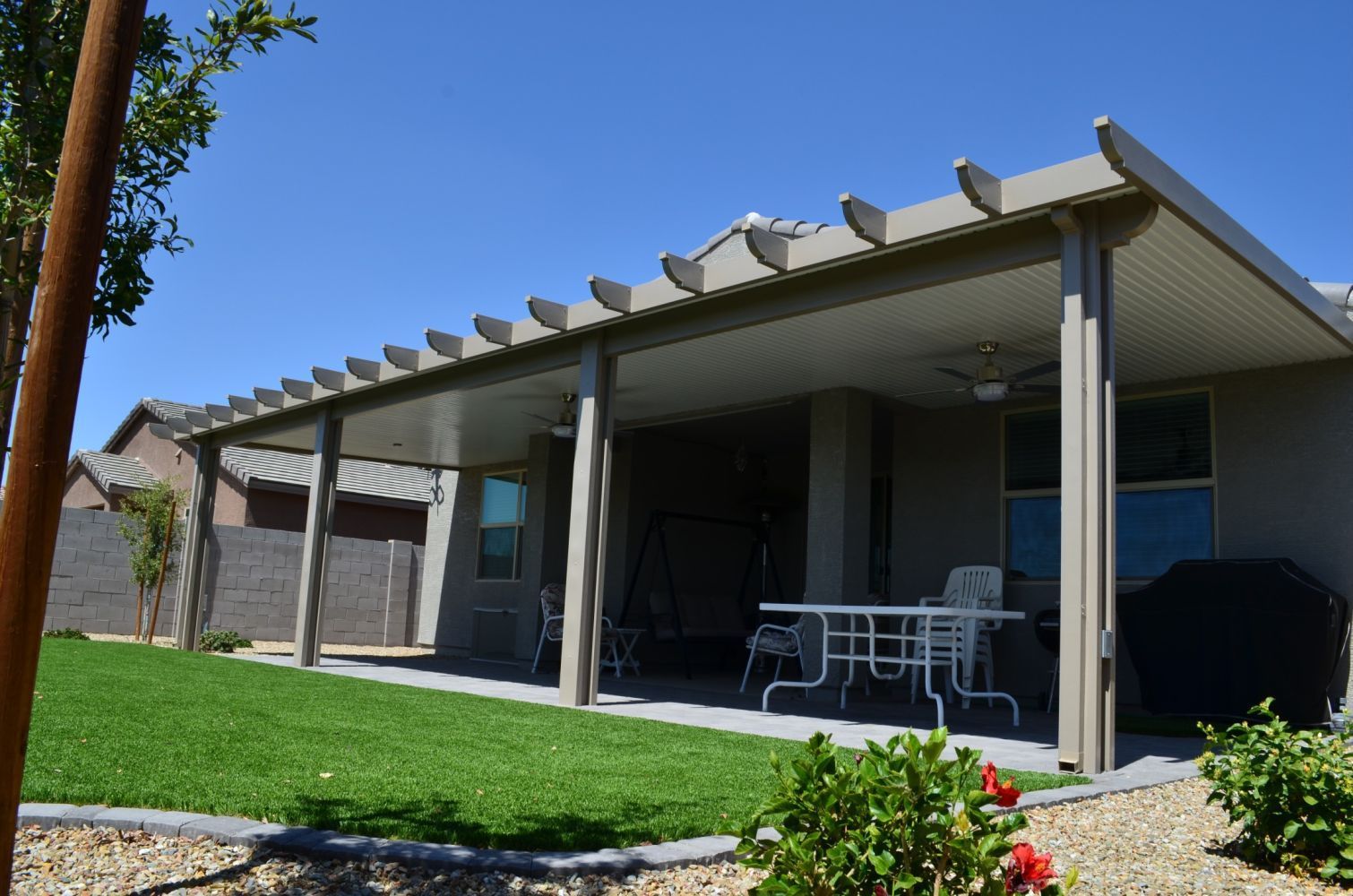
An attached patio cover is the better choice for most Arizona homes, because it ties into the house, blocks the west sun hitting your walls and windows, and costs less to build. A freestanding cover wins when you are shading something away from the house, when your roof line will not cooperate, or when your HOA will not allow an attachment.
We have been building shade in this valley for over 20 years, and this is one of the first questions I ask on an estimate. It is not really a style question. It is a question about where you actually spend time outside, and what your roof will let us do.
What Each One Actually Is
An attached cover fastens to your house. We mount a ledger to the fascia or the wall and the outer edge lands on posts, so it becomes an extension of the roof line and, done right, looks like it came with the house. A freestanding cover stands on its own posts and touches nothing, which means it can sit anywhere in the yard: over pool seating, over an RV pad, over the patch of grass where the afternoon sun is brutal.
Where the Attached Cover Wins
Most of our Phoenix jobs end up attached:
• It shades the house itself. An attached cover on a west or south wall keeps sun off your slider and stucco, and that is the shade that shows up on your power bill.
• Fewer posts. Two posts instead of four or six means less clutter in a small yard and a cleaner sight line to the pool.
• It usually costs less to build, and it reads as part of the home, which buyers and HOA committees both respond to.
If your patio is right off the back of the house, attached is almost always the right call.
Where the Freestanding Cover Wins
Then there are the jobs where attaching is impossible or a bad idea:
• You want shade away from the house: pool lounge area, fire pit, outdoor kitchen, play set, or an RV or boat pad.
• The roof line will not work. Low eaves, a steep pitch, a second-story window right where the ledger would land, or solar panels in the way.
• The HOA says no attachments. Some communities restrict anything fastened to the structure, and a freestanding cover sidesteps that entirely.
Freestanding also gives you a full four-sided roof line, which some homeowners prefer, particularly with a gabled roof patio cover.
Two-story homes raise their own questions about window placement, ledger height, and drainage. If that is your house, read our follow-up on whether you can attach a patio cover to a two-story house in Arizona before you decide between attached and freestanding.
Freestanding covers carry their whole load on four posts, so the anchoring matters even more. We explain when an existing slab is enough and when we pour new concrete in our post on footings for a patio cover in Arizona.
A Backyard in Surprise That Made the Case
A homeowner in Surprise was set on one attached cover across the whole back of the house. Reasonable instinct. But the spot she actually used every evening was pool seating about twenty feet out, and the house shadow never reached it until nearly sunset. We walked the yard with her at four in the afternoon in June, which is the only honest way to do this, and the answer was obvious once we were standing in it. She got a smaller attached cover shading the slider and a freestanding structure over the pool seating. Both get used.
That is the mistake I see most: people decide the type before they decide where the shade needs to land. Stand in your yard in the late afternoon in summer before you sign anything.
The Honest Counterpoint: Freestanding Costs More to Build
A freestanding cover needs more posts and more footings, and in Arizona those footings matter. Our soil runs from loose to caliche hard, and a structure standing on its own handles monsoon wind loads with no help from the house, which means deeper footings, more engineering and a longer build. It is also a harder permit and HOA conversation in some communities, because it reads as a separate structure rather than an addition. We handle the HOA approval and permit paperwork for our customers either way, but the freestanding route usually has more of it behind the scenes.
On wind, neither type is automatically stronger. Engineering and footings decide it, not whether it touches the house, and we covered that in whether a patio cover can withstand monsoon winds.
Get a Free Estimate and Talk It Through
The right answer depends on your roof, your yard and where the sun actually lands in July. That is a five-minute conversation once somebody is standing in your backyard, and we will tell you honestly if attached is the better value even when freestanding would be the bigger sale.
Call Southwest Patio at 623-695-6445 for a free estimate. We are The Shade Experts, ROC #282768, and we have been building patio covers in Phoenix and across Maricopa, Pinal, Gila and Yavapai counties for more than 20 years. We carry Solara and Four Seasons lines with Elitewood materials, we handle HOA approval and permit paperwork for you, and financing is available. Have a look at the product styles to see what fits your yard.
Frequently Asked Questions
Does a freestanding patio cover need a permit in Arizona?
Usually yes, and in most Valley cities the requirements resemble an attached cover: a permit plus engineering for footings and wind load. Rules vary by jurisdiction and your HOA may review it separately. We pull the paperwork together as part of the job.
Can you attach a patio cover to a tile roof?
Yes, regularly. It takes more care than a fascia mount because the tile has to be handled and the flashing has to be right, but it is routine. If a roof genuinely will not take a ledger, that is when we start talking about freestanding.
Which one holds up better in monsoon wind?
Neither by default. Engineering, post size, footing depth and installation quality decide it. A properly engineered freestanding cover handles our storms fine and a poorly built attached one does not. Judge the builder, not the category.
Contact Southwest Patio
Southwest Patio
2523 S 227th Ave
Buckeye, AZ 85326
Phone: 623-695-6445
Stay connected with Southwest Patio for patio cover ideas, shade solutions, project updates, and outdoor living tips for Arizona homeowners.
Follow Southwest Patio Online:
Facebook | X | Instagram | YouTube
Worked with Southwest Patio?
Leave us a review on Google Maps