
Do Patio Covers Add Value to Your Home in Arizona?
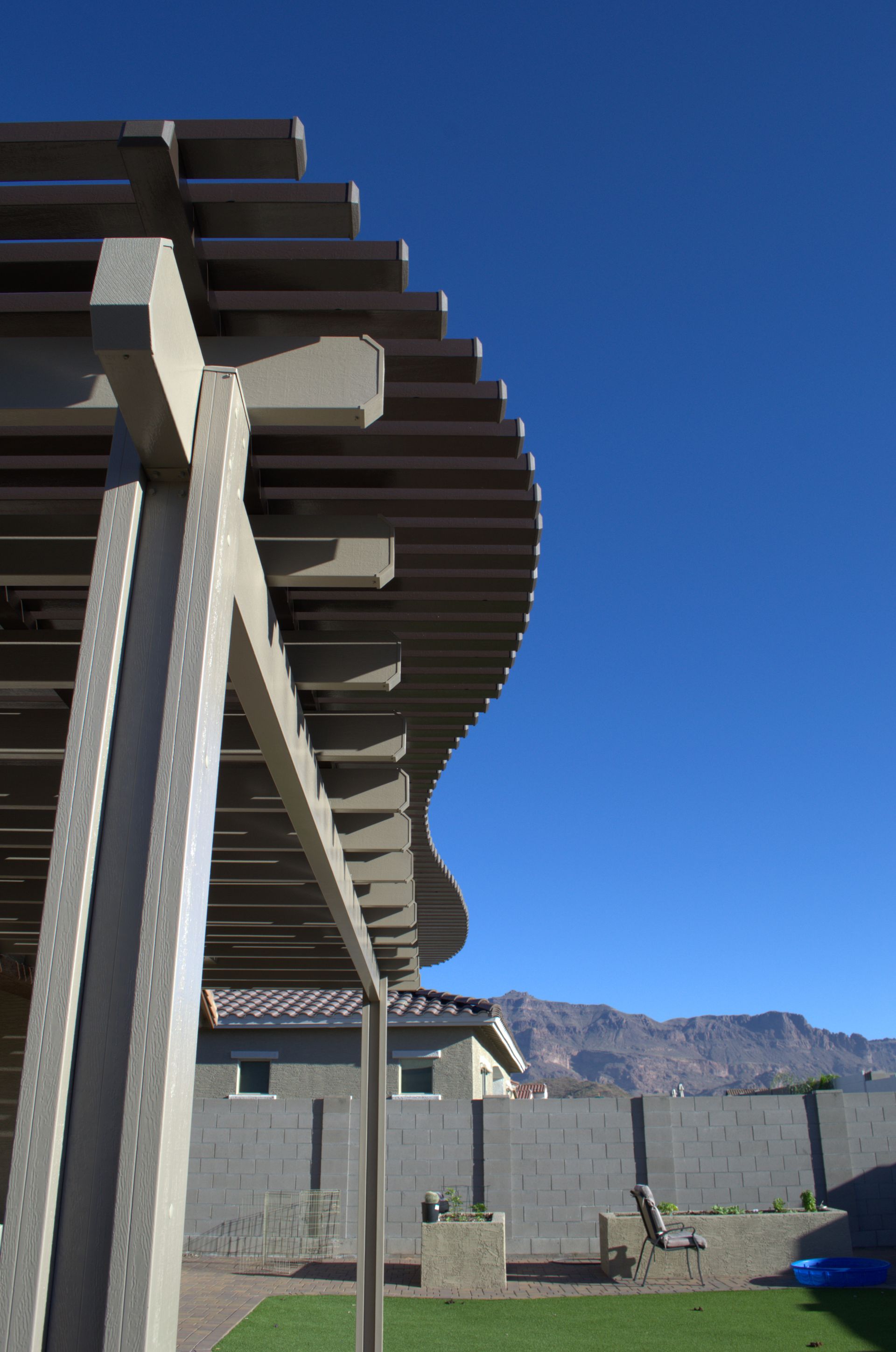
Do patio covers add value to your home in Arizona? Yes, a permitted, professionally built attached cover usually does, but not dollar for dollar. In my 20-plus years doing this, a good attached cover comes back somewhere around 50 to 70 percent of what you paid on the appraisal, and it reliably helps a house sell faster than the one down the street with a bare slab baking in the sun. Speed of sale is money too. Buyers walk out back in June, feel shade instead of heat, and write an offer.
Do Patio Covers Add Value to Your Home in Arizona on the Appraisal?
Here's the honest version. An appraiser is not going to write you a check for your patio cover. They look at comparable sales and make an adjustment, and they only count permitted square footage. If your cover is on record with the city or county, it's part of the house. If it isn't, most appraisers give it no credit at all. Same shade, zero value on paper.
In most Valley neighborhoods, covered patio adjustments land from the low thousands up to eight or ten thousand dollars. A big insulated cover with lights and fans pulls more. A 10-by-10 pulls less.
Permitted Versus Unpermitted, and Why It Matters at Closing
I get calls every year about covers somebody's brother-in-law built. No permit, no engineering, posts set in dirt. Then the buyer's inspector flags it and it's a problem three days before closing. Now you get three bad choices: permit it after the fact and rebuild to code, tear it out, or drop your price.
We're licensed under ROC #282768 and we pull permits as part of the job. Cities in Maricopa, Pinal, Gila and Yavapai counties each have their own quirks. For the numbers side, see my post on what an aluminum patio cover costs in Arizona.
Attached Versus Freestanding, and Materials That Survive Our Summers
Attached covers generally appraise better. They tie into the house and read as an extension of the living space. Freestanding structures, like a pergola over a fire pit, are more of a landscape improvement. Appraisers are stingier with those.
Materials matter just as much. We hit 115 in July, then monsoon wind comes through at 60 miles an hour and finds anything that wasn't engineered and anchored. Wood looks good about four years, then it splits and feeds termites.
We build with Elitewood aluminum and carry the Solara and Four Seasons lines. Aluminum doesn't rot, warp, or need paint, and insulated panels knock the heat down in a way lattice never will. Compare them on our patio cover product styles page.
• Attached, permitted, insulated aluminum: strongest appraisal credit
• Attached lattice or louvered: good value for partial shade
• Freestanding pergola: strong curb appeal, weaker appraisal credit
• Wood built without a permit: a liability, not an asset
A Seller in Chandler Who Made the Math Work
A couple years back a fellow in Chandler called me in October. He planned to list in the spring, and his backyard was a bare slab and gravel. His agent said the house would show poorly in the heat.
We built an attached insulated cover, about 16 by 30, with two fans and can lights. Permitted through the City of Chandler, HOA approved before we broke ground. The appraisal credited it on the adjustment line, not the whole amount he spent, but a solid chunk.
The bigger win was showings. One family stayed twenty minutes out there. The house went under contract in eleven days, where similar homes sat closer to forty.
When a Patio Cover Will Not Pay You Back
I'd rather tell you the truth than sell you something. Over-building for the neighborhood is the big one. If the homes on your street run 1,600 square feet, a 900-square-foot structure with an outdoor kitchen is not coming back. There's no comp to support it.
Unpermitted work is the other one, and I'll say it twice because it costs real money. A cover that has to be torn out before a sale is worse than no cover at all. You pay for it twice.
Skipping HOA approval will bite you too. Most Valley HOAs care about color, height, and how it looks from the street. Getting turned down after the posts are set is an expensive lesson. We handle the submittals.
The Value That Never Shows Up on an Appraisal
Shade on the west side drops the temperature on your slab and your wall, which takes load off the AC in July and August. Your patio door glass isn't taking direct sun anymore, and your furniture stops turning to chalk.
Then there's just using your yard. From May to October, an uncovered patio in Phoenix is decoration. With a cover you get mornings and evenings back. That's what buyers feel when they walk out your back door. See how we handle it on our Phoenix patio covers page.
Ready for a Free Estimate? Call 623-695-6445
So, do patio covers add value to your home in Arizona? Permitted, attached, and sized right for your neighborhood, yes. You'll get a good share back at appraisal, you'll likely sell faster, and you'll enjoy the yard meanwhile. Done wrong, it costs you at closing.
Folks call us The Shade Experts for a reason. Estimates are free, we help with HOA approval and permits, and financing is available. Call me at 623-695-6445, or look around Southwest Patio.
Frequently Asked Questions
How much value does a patio cover add to an Arizona home?
In my experience an attached permitted cover returns roughly 50 to 70 percent of its cost on the appraisal, usually from the low thousands up to eight or ten thousand depending on size, materials, and your comps. The rest shows up as a faster sale and a stronger negotiating spot.
Does a patio cover need a permit in Arizona?
Almost always. Attached covers are structures, and cities across Maricopa, Pinal, Gila and Yavapai counties want them permitted and built to code for wind load. Rules vary, so we check on every job.
We pull the permit as part of the work. That paperwork is what lets an appraiser count the space later, so it isn't just red tape.
What kind of patio cover holds up best in Arizona heat and monsoons?
Engineered aluminum, hands down. It won't rot, split, or feed termites, and it doesn't need repainting every few years like wood does out here.
For heat, a solid insulated roof makes the biggest difference. If you'd rather control the sun by season, compare it to adjustable louvered patio covers.