
How Much Does an Aluminum Patio Cover Cost in Arizona?
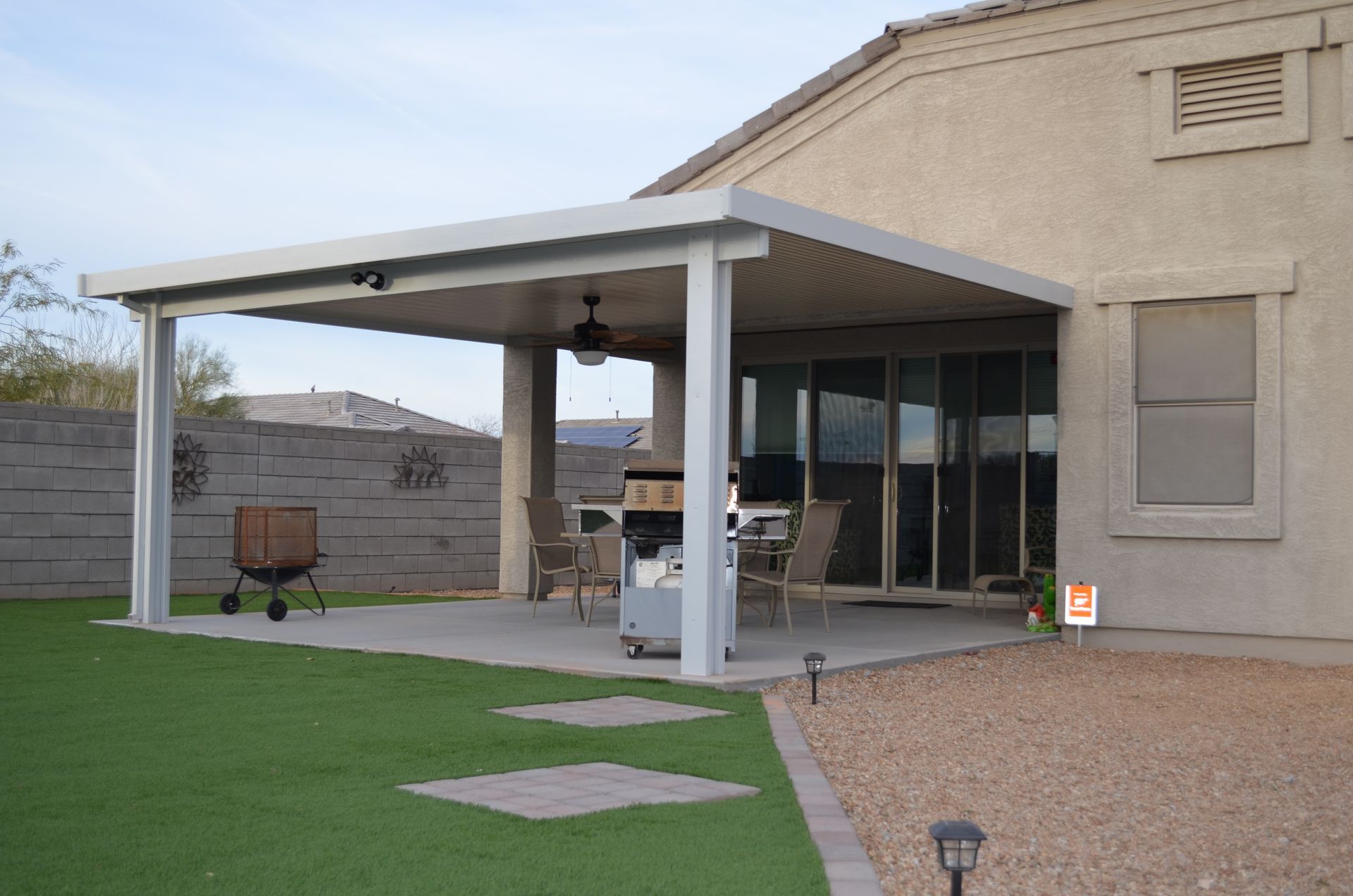
Most aluminum patio covers in Arizona cost about $3,500 to $12,000 installed, and a motorized louvered system usually runs $15,000 to $30,000 or more. The size of the cover, the style you pick, and a few site details decide where your project lands in that range.
I own Southwest Patio, and I've been building patio covers around Phoenix for more than 20 years (ROC #282768). Folks call us “The Shade Experts.” In this post, I'll give you the same straight talk on price that I give at a kitchen-table estimate. No games. Just real numbers.
Aluminum Patio Cover Cost in Arizona: Typical Price Ranges
Here's what most homeowners across Maricopa, Pinal, Gila, and Yavapai counties pay for the covers we install:
• Open lattice covers: about $3,500 to $7,000
• Solid flat pan covers: about $4,500 to $8,500
• Solid insulated covers: about $6,000 to $12,000
• Adjustable louvered covers: about $15,000 to $30,000 and up
A quick rule of thumb: plan on roughly $25 to $45 per square foot for most solid aluminum covers. You can see photos and details of every option on our patio cover product styles page. And if you want a tour of everything we build, our first blog post walks through each style, too.
One of the biggest price swings in any patio cover quote is the style you pick. An adjustable louvered roof costs a good bit more than a solid one, but it also does things a fixed roof cannot, like letting in that beautiful winter sun. Before you settle on a number, it helps to know which style actually fits your yard. I break the whole decision down in my guide to louvered vs. solid patio covers for Phoenix homes.
What Changes the Price
Two covers can look almost the same from the street and still be thousands of dollars apart. Here's what moves the number:
• Size. A 10x20 cover uses a lot less material than a 20x40, and it needs fewer posts and footings.
• Style. Insulated patio covers cost more than flat pan because of the foam core, but they're strong enough to hold ceiling fans and lights. Louvered patio covers cost the most because of the moving parts and motors.
• Finish. Upgrading to Elitewood material gives you a rich wood look without the termites or repainting, and it adds to the price.
• Concrete work. If your posts land on dirt or pavers instead of a good slab, we dig footings and pour concrete.
• Electrical. Fans, lights, and outlets need a licensed electrician.
• HOA and permits. Most Valley cities want a permit for an attached cover. We help with the HOA approval and permit paperwork so it doesn't eat your weekends.
One line item people forget until it bites them: city permit fees and HOA submittals can add both dollars and weeks to a patio cover project, and every Valley city plays by slightly different rules. Before you lock in your budget or your timeline, take five minutes with my plain-English guide on whether you need HOA approval or a permit for a patio cover in Arizona.
One question we often get right after price: how does aluminum stack up against a traditional wood pergola? Short version — wood usually costs less on day one and a lot more every year after, once Arizona sun, termites, and re-staining enter the picture. We put the full 10-year comparison in our guide to wood vs. aluminum patio covers in Arizona.
Cost is only half the question. The other half is what you get back when you sell. A permitted, attached aluminum cover usually returns a solid share of what you spent on the appraisal, and it tends to move a house faster in the summer because buyers can actually stand outside. Unpermitted work does the opposite and can cost you at closing. I broke down the real numbers, what appraisers credit, and when a cover is not worth it in do patio covers add value to your home in Arizona.
A Real Job: What One Goodyear Family Paid
Last spring, we built a cover for a family in Goodyear with a west-facing back patio. By 3 p.m., that concrete was hot enough to fry an egg, and their two dogs wouldn't even step outside. They wanted shade, a ceiling fan, and something their HOA would sign off on.
We built them a 14x20 insulated cover with two posts, a fan beam, and a finish that matched their trim. The total came to about $8,400, including the footings and the permit. The HOA and city paperwork took about three weeks, and the install itself took two days. The wife told me their patio runs 10 to 15 degrees cooler now, and they eat dinner out there most nights from October through May. That's the kind of call-back I like getting.
When an Aluminum Cover Is Not Your Cheapest Answer
I'll be honest with you, because that's how I'd want to be treated. An aluminum patio cover isn't always the right buy. If you're renting, or you plan to sell within the year, a $300 shade sail or a good umbrella may be all you need. If you just want shade over a grill, don't let anyone talk you into a $20,000 louvered system when a simple flat pan will do the job.
And if you think you might enclose the space into a sunroom someday, tell your estimator up front. It changes how the cover should be engineered, and planning ahead is a lot cheaper than tearing out and starting over.
Budget is half the planning question. The other half is the calendar, because HOA approval, permits, and manufacturing add weeks before the first post goes in the ground. For the full schedule from contract to shade, read how long does it take to install a patio cover in Arizona.
Simple Ways to Keep Your Cost Down
• Attach the cover to the house instead of going freestanding. Fewer posts means fewer footings.
• Pick flat pan over insulated if you don't need fans or lights overhead.
• Book in fall or winter, when schedules are friendlier than in the spring rush.
• Ask about financing for your dream backyard so you can spread out the payments.
• Get a written estimate instead of guessing. Ours are free, and there's no pressure.
One more thing to weigh before you settle on a budget: a patio cover is not just an expense, because the right cover pays back part of its price every summer. Shading a hot west-facing wall and slider takes real strain off your air conditioner during the worst months of the year. I put honest numbers to it — including when the savings are big and when they are not — in my answer to do patio covers really lower your cooling bill.
Get a Real Price on Your Aluminum Patio Cover
The honest answer on aluminum patio cover cost in Arizona is a written number for your exact patio, not a guess off the internet. At Southwest Patio, we'll measure your space, walk you through the styles, and handle the HOA and permit paperwork. We install proven Solara and Four Seasons product lines, and estimates are always free. Call or text me at 623-695-6445 and let's get you some shade before the next Phoenix summer hits.
Frequently Asked Questions
Do I need a permit for an aluminum patio cover in Arizona?
In most cities around the Valley, yes, an attached patio cover needs a building permit, and many HOAs want to approve the design first. We handle that paperwork for our customers as part of the job.
How long does an aluminum patio cover last in the Arizona sun?
A quality aluminum cover with a baked-on finish will last 20 to 30 years or more here. It won't warp, rot, or feed termites the way wood does. An occasional rinse is about all the care it needs.
Is an insulated patio cover worth the extra money?
If you want ceiling fans, lights, or a noticeably cooler patio, I'd say yes. The foam core blocks a lot of heat and gives the roof extra strength. If you only need basic shade, a flat pan cover saves you money and still does a fine job.
Call for a quote today! 623-695-6445